L2
Application Spec Library
Functional specs co-authored with end-customer verticals — packaging, insulation, soil amendment, acoustic panel, marine substrate. Each spec is written to consume variance, not fight it.
Phasal · Bioharvest
Substrate as infrastructure.
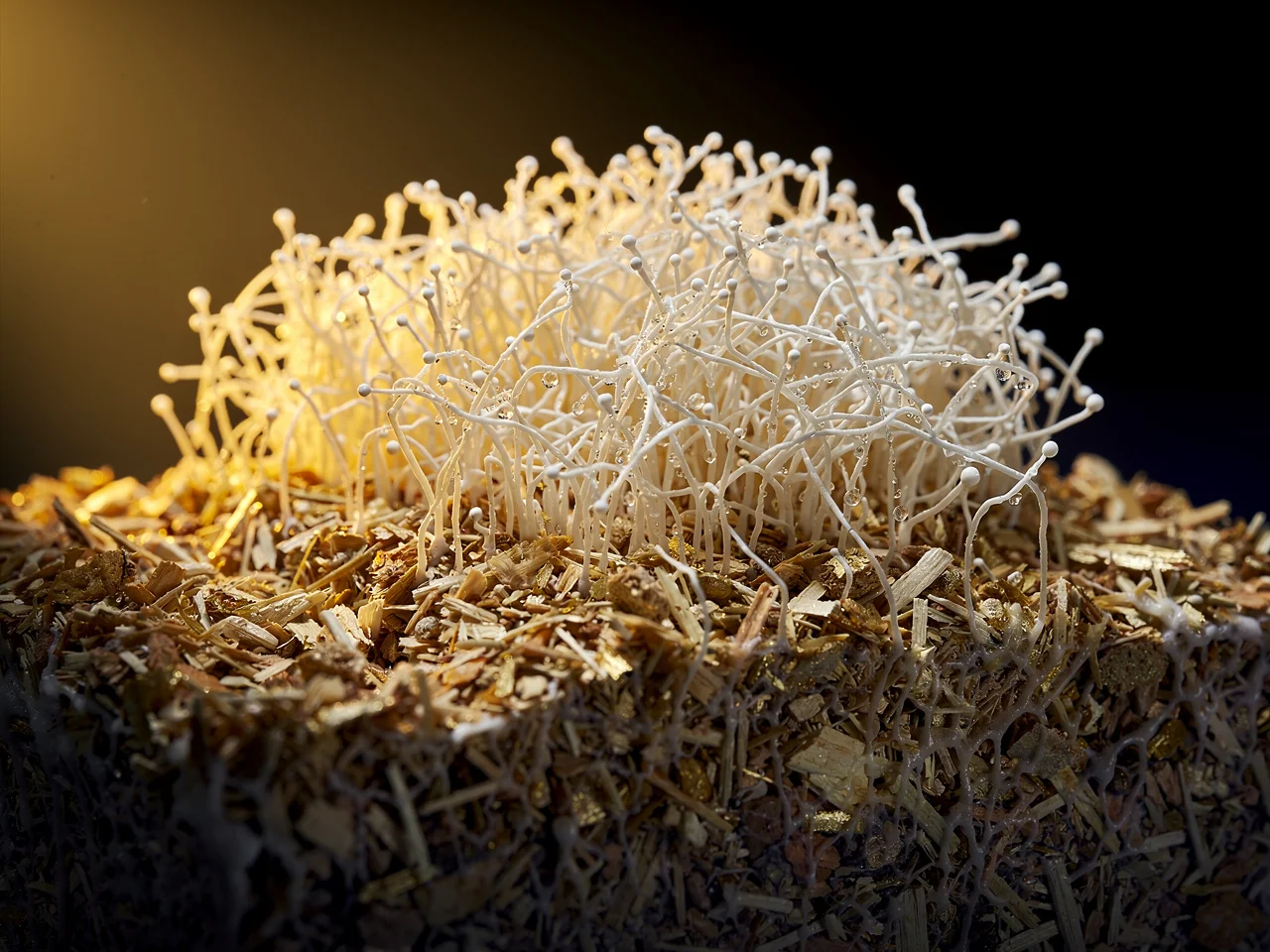
Bioharvest is the materials-science arm of Phasal Science focused on biological feedstocks — mycelium on agricultural waste, bacterial cellulose, biocement, hybrid composites. The substrate is biology. Variance is the feature. The platform is the architecture around it: open atlases, application specs, process cookbooks, reference hardware, and certification authoring. We don't build a moat. We build the utility and let regional growers ship on top.
The platform
The dying competitors fight biological variance. We absorb it as the design specification. Everything published — atlases, specs, cookbooks, hardware, standards.
Pillar 01
The Substrate Atlas. The Application Spec Library. Process cookbooks. LCA in joules. Published failures. Five publication tracks; permissive license; the platform's gravitational center.
Pillar 02
Six active investigation tracks: substrate variance characterization, application-driven specs, heterogeneous composites, living materials, reference bioreactor designs, certification authoring.
Pillar 03
Three horizons, license-able to regional growers rather than manufactured at central scale: packaging substrates, hybrid composites, living materials.
Live now · Atlas v0.1
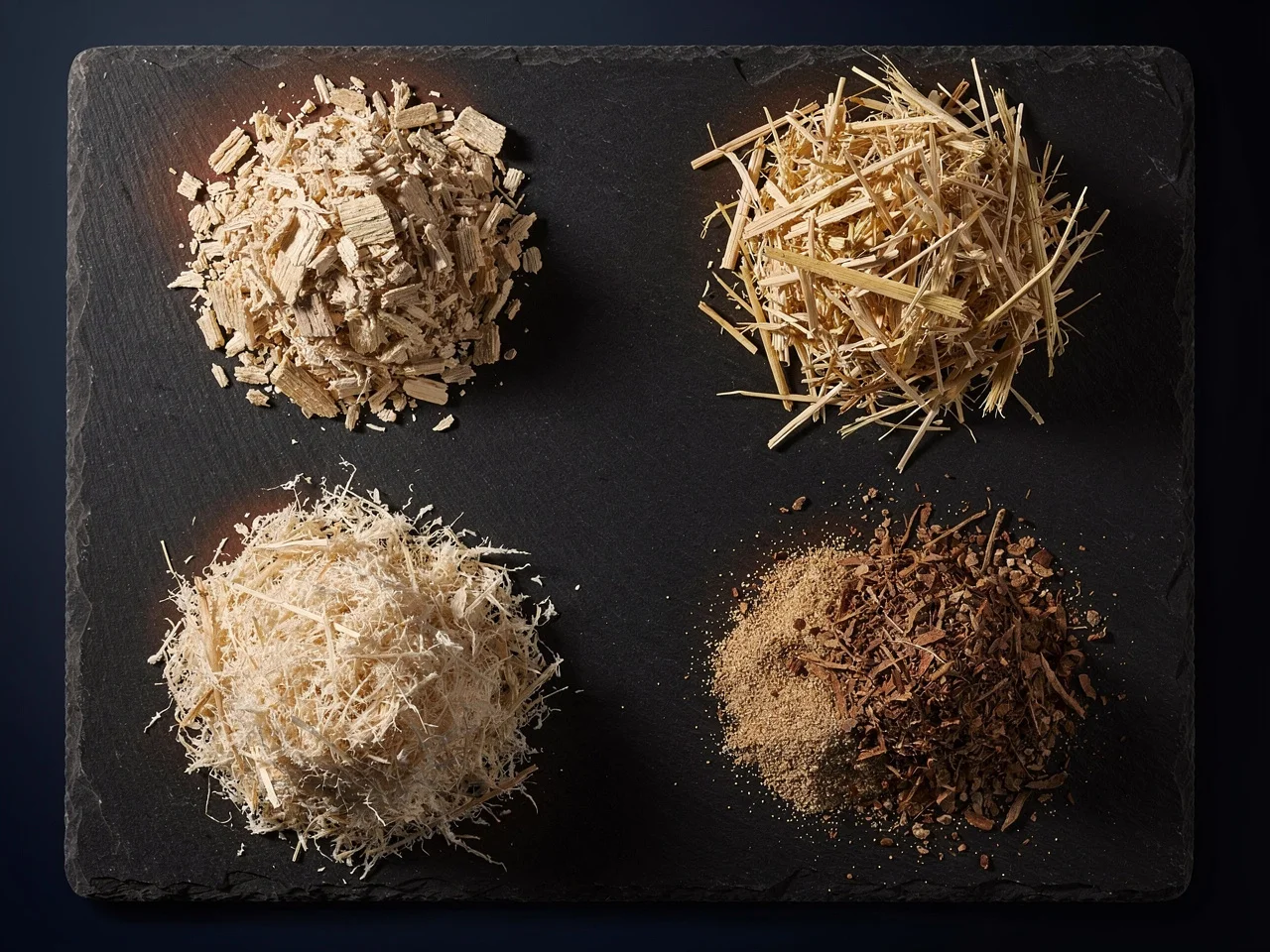
Hemp hurd. Corn stover. Rice straw. Sugarcane bagasse. Sawdust. Coffee chaff. Palm waste. Each agricultural feedstock × mycelium species combination is characterized for mechanical, thermal, acoustic, and degradation properties. Variance bands are reported, not suppressed. Engineers consume the variance instead of fighting it.
The Atlas becomes the ASTM-equivalent reference for biomaterial application engineering — but open, peer-extensible, and accountable in joules.
Pillar 01 · Open Literature
Everything that isn't a regulatory chokepoint or a trade-secret strain is published. Permissive license. Open data, open methods, public-interest infrastructure.
L1
live · v0.1
Continuously-updated open reference characterizing biological feedstocks × species combinations by mechanical, thermal, acoustic, and degradation properties.
Open
L2
Functional specs co-authored with end-customer verticals — packaging, insulation, soil amendment, acoustic panel, marine substrate. Each spec is written to consume variance, not fight it.
L3
live · PCB-001
Open methods for substrate sterilization, inoculation, growth-chamber design, heat-treatment, finishing. Anyone can build a regional grower.
Open
L4
Every published material includes full energy accounting in joules from feedstock through delivery, matching Phasal's measurement charter. The only honest accounting, by design.
L5
Post-mortems of our own failed experiments — and, with permission, others'. Negative results have value; the industry doesn't publish them; we will.
Venues
Phasal preprint server · bioRxiv / engrXiv co-posting · peer-reviewed publication in sustainable-chemistry and cleaner-production journals. Every result is reproducible from the same open inputs.
Reference hardware
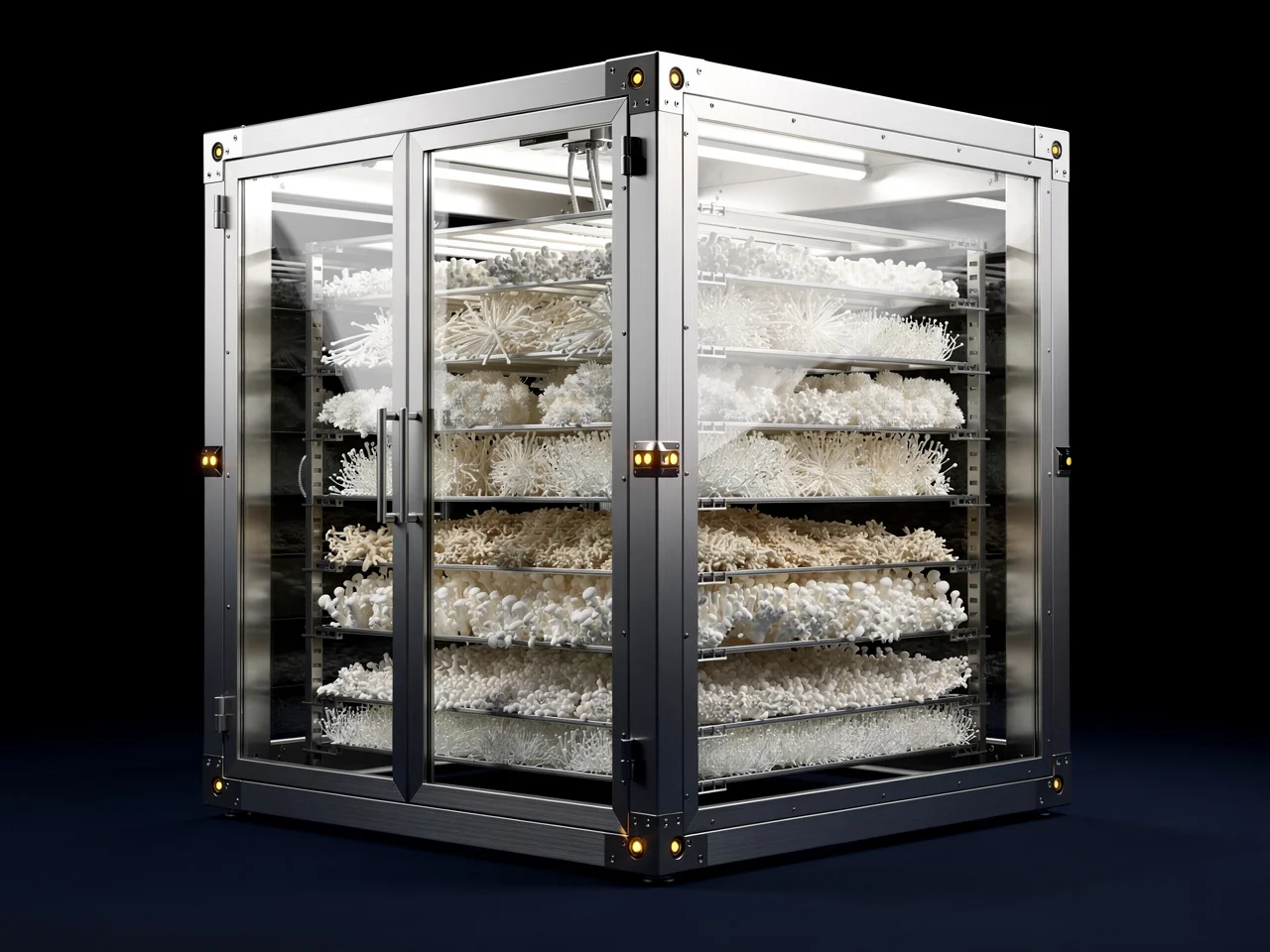
Open hardware designs for regional-scale growth chambers, sterilization systems, heat-treatment equipment. 1 m³ to 100 m³. Standard interfaces, modular construction, locally-sourced parts.
The substrate is free. The strains are open. The cookbooks are public. The reactor is a buildable, published reference. Any regional grower with a workshop and an inoculation hood can be in production within months.
Pillar 02 · Open Research
Phasal contributes systems architecture, measurement infrastructure, and integration. Collaborators contribute fundamental science and deployment data. Everything published.
Track A
Systematically characterize property envelopes of mycelium grown on regionally-available agricultural waste. Build the open Substrate Atlas, region by region.
Track B
Direct collaboration with packaging, building-materials, acoustic, and agricultural-co-op customers to publish functional specs that absorb variance instead of demanding tolerance.
Track C
Mycelium + bacterial cellulose. Mycelium + biocement. Mycelium + bioplastic skin. Mycelium + algal aggregate. Multi-component systems thinking where single-process optimizers fail.
Track D
Engineered living materials — dormant spores that reactivate, microbial sensing skins, self-healing biocement. Long-cycle, federally-aligned research with deployment architecture.
Track E
Open hardware for 1 m³ to 100 m³ growth chambers, sterilization, heat-treatment. Standard interfaces, modular construction. The bottling-plant blueprint for anyone, anywhere.
Track F
Phasal as the authoring entity for new ASTM-equivalent standards in biomaterial categories. Cradle-to-Cradle, BioPreferred-aligned. The standards become public infrastructure.
"We don't build the moat.
We build the utility,
and let the bottlers thrive on top."
The Phasal Bioharvest thesis
Pillar 03 · Product Pipeline
Each product is packaged as an open spec + reference strain + reference substrate + reference protocol — a turnkey license for regional growers, not a Phasal-centralized factory output.
Horizon 01
PSS-1
Open spec + reference strain + reference substrate + mold-geometry library + finish protocol. Turnkey license for regional growers.
SAP-1
Spent mycelium substrate with characterized organic carbon load, packaged for agricultural co-op deployment. Variance is free here — soil doesn't care.
APS-1
Variance-tolerant acoustic spec where heterogeneity improves diffusion. Co-developed with acoustic-consultancy partners.
Horizon 02
H2-A
Hybrid wall-infill component for residential and light commercial construction. Biocement skin + mycelium core. Carbon-negative on full LCA.
H2-B
Variance-tolerant mycelium core with thin PHA moisture barrier. Solves the moisture-sensitivity gap that has kept mycelium out of food packaging.
H2-C
BC + mycelium hybrid sheet for industrial applications — gaskets, liners, separators — where the leather framing trap doesn't apply.
Horizon 03
H3-A
Dormant spores reactivate to seal cracks. Infrastructure-scale deployment, federally-aligned funding, deployment over a decade.
H3-B
ELM-derived envelopes that change color or fluorescence in response to moisture, temperature, or chemical exposure. Building-envelope diagnostics without sensor arrays.
H3-C
Algal biomineralization to displace cement in road and infrastructure aggregates. Voluntary carbon-credit revenue stacks on material sales.
Regional growers, applied engineers, agricultural co-ops, packaging companies, building-materials firms, acoustic consultancies, materials labs — every layer of the bioharvesting stack is open and looking for collaborators. The substrate is biology. The platform is what we build together.